Response Inhibition in Autistic Adults: A Functional Near-Infrared Spectroscopy Study in Virtual Reality
Feb 1, 2026·, ,,,,,
Anna Vorreuther
Nektaria Tagalidou
Dr. Katharina Lingelbach
Armin Hubert
Laura Bareiß
Tanja Nittel
Marc Ristau
Mathias Vukelić
Abstract
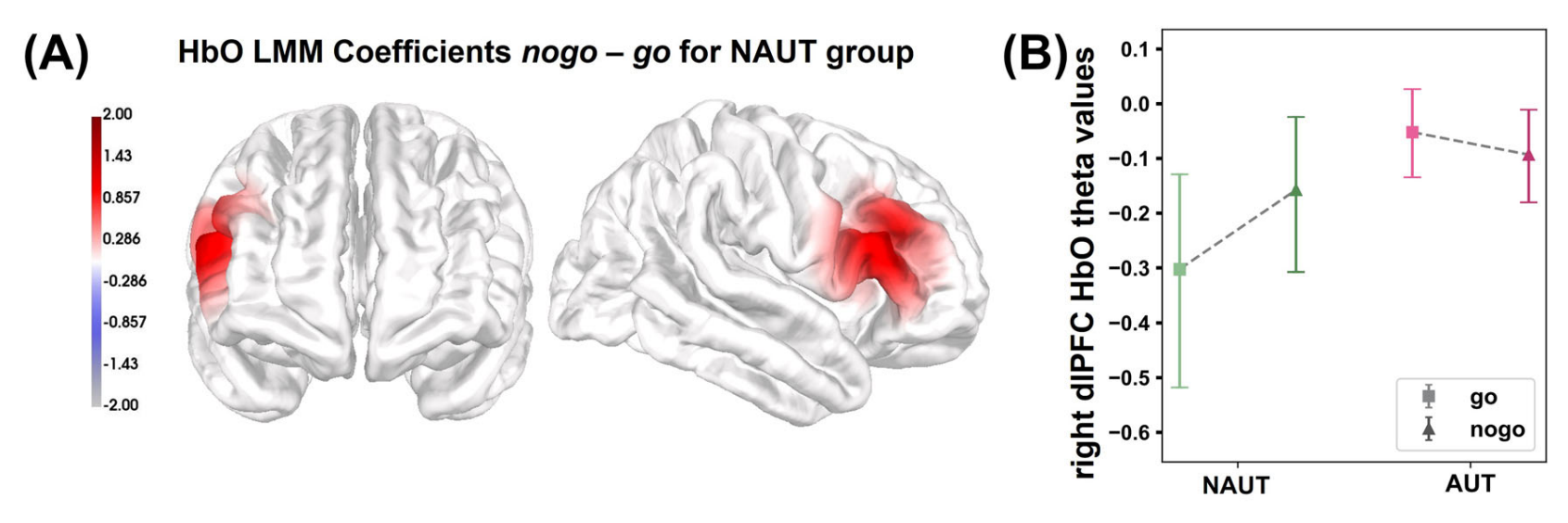
We used functional near-infrared spectroscopy (fNIRS) to measure prefrontal responses as 22 autistic and 10 non-autistic adults performed a visuospatial go/no-go task in virtual reality. Both groups responded more slowly and made fewer errors during no-go blocks, with no significant behavioural differences between groups. A significant increase in oxygenated haemoglobin in the right dorsolateral prefrontal cortex during no-go blocks was observed in the non-autistic group only. The study shows how immersive tasks and fNIRS can be combined to examine response inhibition.
Type
Publication
Brain and Behavior, 16(2), e71249